

How to Choose the Right Percentage for Tesla Window Tint in the Inland Empire starts with one simple idea: the “right” percentage is the one that fits your driving hours, your comfort goals, and the windows you want to tint. If you drive a Model 3, Model Y, or Cybertruck around Montclair, CA, you already know how fast the cabin can heat up and how tiring glare can get on bright Inland Empire days.
If you want help picking the right percentage and getting a clean install from a certified shop, AV Tint is at 5521 Holt Blvd STE F, Montclair, CA 91763. Call (909) 983-4511 or book here: tintav.com/contact-us.
Table of contents
- What “tint percentage” actually means
- Quick cheat sheet: common tint percentages and what they feel like
- Start with your goal: heat comfort, glare, privacy, or night visibility
- Tesla window-by-window: where the percentage matters most
- Front windows and windshield: the California rules that shape your choices
- Choosing tint percentage for Inland Empire conditions
- Recommended percentage setups for common Tesla drivers
- How to test your choice before committing
- Why installation quality matters as much as the percentage
- Next steps: get your Tesla tint plan in Montclair, CA
- FAQs
- Sources
What “tint percentage” actually means
When people talk about tint percentage, they are usually talking about Visible Light Transmission (VLT). VLT is the percentage of visible light that passes through the glass and film together. A lower number looks darker because less light passes through. A higher number looks lighter because more light passes through.
Here’s what matters: your Tesla already has factory glass with its own light transmission. The final look and feel is the combo of:
- factory glass
- film type
- film VLT percentage
- the angle of the glass (Teslas have a lot of it)
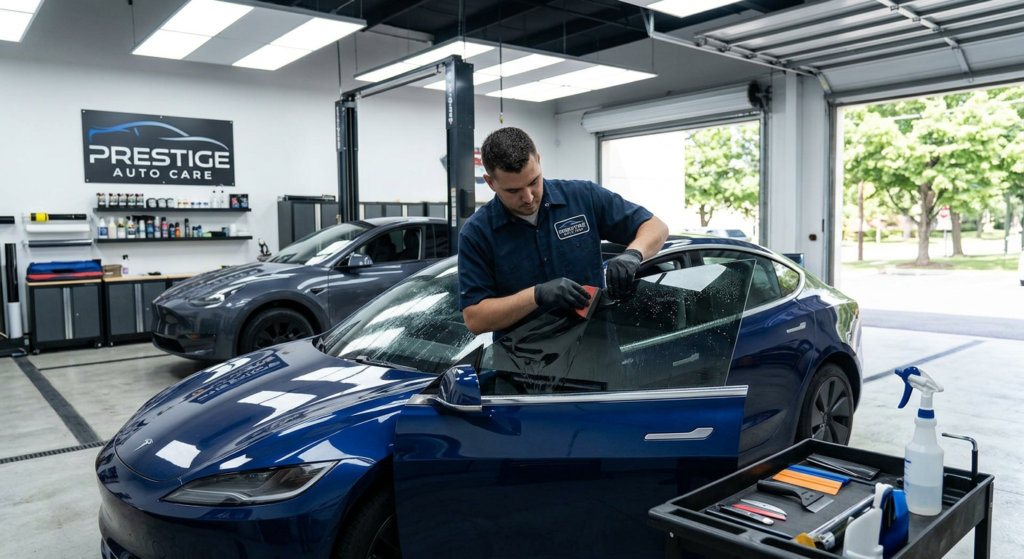
That’s why two cars with “the same tint percentage” can still look different in real life.
Quick cheat sheet: common tint percentages and what they feel like
These are the percentages people ask about most. Your best choice still depends on the window and your routine.
70% to 50% VLT
- Looks light and subtle
- Good for drivers who want glare relief and comfort with a near-stock look
- Often discussed for front windows when you want a clean look and still want strong visibility at night
35% VLT
- A common “balanced” look for many daily drivers
- Adds privacy while still feeling usable for many people at night
- Often used on rear windows and rear glass for a clean Tesla look
20% VLT
- Strong privacy in parking lots and traffic
- Night driving can feel darker for some drivers, especially on unlit roads
- Often used on rear windows when privacy is the priority
5% VLT
- Very dark “limo” look
- Strong privacy
- Can feel too dark for many drivers at night
- Usually best reserved for rear glass only if you are sure you can live with it
Now here’s the thing: a “perfect” percentage on paper can feel wrong if you drive home at 9 PM on dark roads or you have sensitive eyes.
Start with your goal: heat comfort, glare, privacy, or night visibility
Let’s break it down. Choosing the right percentage gets easier when you pick the main goal.
Goal 1: Heat comfort in the Inland Empire
If heat comfort is the priority, the film type matters, not just the shade. AV Tint explains that it helps you choose a tint level based on your routine and what you want to improve, including bright sun and cabin comfort.
See: Window Tint and Ceramic Window Tint.
A practical approach:
- Keep the front windows light enough for your visibility comfort
- Use ceramic film where you feel heat the most
- Use a consistent look across the Tesla so it feels “finished”
Goal 2: Glare reduction
If glare is your main problem, you don’t always need the darkest tint. AV Tint notes that tint can reduce harsh glare so your view feels calmer during daytime driving.
See: Tesla Window Tint.
Glare tips:
- A lighter percentage can still help if it’s installed cleanly
- Your windshield and front side windows usually drive the most glare fatigue
Goal 3: Privacy
If privacy is the main goal, you’ll likely go darker on rear windows and rear glass, then pick a front setup that still feels comfortable for your night driving.
Goal 4: Night driving comfort
If you do a lot of night driving around Montclair, CA, Upland, CA, or Rancho Cucamonga, CA, the right percentage is often lighter up front. You want your eyes to relax at night, not work harder.
Tesla window-by-window: where the percentage matters most
Tesla glass layout changes how tint feels. Here’s a window-by-window way to choose.
Front side windows
This is where many drivers feel heat on their arms and face. It’s also the window area that draws the most attention from a “legal setup” standpoint in California, so your options here can be more limited.
A lot of Tesla owners choose a lighter percentage on the front doors and then go darker behind the driver.
Rear side windows
Rear sides are where many people choose privacy. This is also where your passengers feel sun and glare in the back seat, especially during afternoon drives.
Rear glass
Model 3 and Model Y rear glass is a big visual surface. Percentage choice here changes:
- how much sun hits from behind
- how private the rear cabin feels
- how “uniform” the Tesla looks from the outside
Windshield
Windshield tint is a different conversation. AV Tint explains that it helps drivers choose a setup that matches comfort and visibility needs, and it highlights glare during early mornings and late afternoons as a common reason people tint the windshield.
See: Tesla Windshield Tint and Windshield Tinting.
The catch is that windshield choices also connect to California rules. Let’s cover that next.
Front windows and windshield: the California rules that shape your choices
If you’re choosing the right percentage for Tesla window tint in the Inland Empire, you need to know what California allows for the front of the car.
Front side windows (driver and front passenger)
California Vehicle Code § 26708 includes a section that allows clear, colorless, transparent material on the front side windows only when specific conditions are met. One of those conditions is minimum visible light transmittance of 88% for the material, and it references FMVSS 205 and its specified 70% minimum light transmittance requirement for the glazing with the material applied. CVC § 26708
What this means: if you’re thinking about dark tint on the front doors, California rules can limit what’s acceptable.
Windshield
California Vehicle Code § 26708 also describes what can be applied to the top portion of the windshield. It includes a measurement rule where the bottom edge of the material is at least 29 inches above the undepressed driver’s seat using the method described in the statute. CVC § 26708
There are also conditions around reflectivity and distortion. CVC § 26708
The federal standard that gets referenced
CVC § 26708 points to Federal Motor Vehicle Safety Standard No. 205 (49 C.F.R. 571.205) for glazing requirements, including the referenced minimum light transmittance. 49 CFR 571.205
If you want a plan that feels comfortable and stays sensible, it helps to talk with a shop that will explain front-window choices clearly before any film is cut.
Choosing tint percentage for Inland Empire conditions
Here’s what matters about the Inland Empire: you’ll see a lot of bright sun, long stretches of freeway, and hot parking lots. That means your percentage choice should consider more than looks.
If you commute during peak daylight
Many drivers choose:
- a lighter front setup for visibility comfort
- a darker rear setup for privacy and rear-passenger comfort
If you park outside most of the day
Choose a setup that targets the windows that bake you the most, then build the rest for a consistent look.
If you drive into the sun often
Morning eastbound and late afternoon westbound drives are where glare can get tiring. A windshield plan plus balanced side-window tint can make the drive feel calmer.
If you want to plan around how and when you drive, AV Tint’s Tesla pages talk about discussing where you drive most and what bothers you so the choice fits your routine.
See: Tesla Window Tint and Tesla Windshield Tint.
Recommended percentage setups for common Tesla drivers
These are common patterns Tesla owners choose. Your final call should be based on your night driving comfort and the windows you want to prioritize.
Setup A: “I want a clean look and comfort, not super dark”
- Front side windows: lighter percentage that feels clear at night
- Rear side windows + rear glass: medium percentage for privacy and consistency
- Optional: windshield option planned around visibility and the law
This setup is popular for Model Y drivers who want a calm cabin feel without a heavy dark look.
Setup B: “I want privacy in the back, but I still drive at night”
- Front side windows: lighter percentage for night comfort
- Rear side windows + rear glass: darker percentage for privacy
- Optional: glare strip on the windshield for low sun angles
Setup C: “I’m in the car all day and want the cabin to feel less harsh”
- Choose ceramic film as the base
- Front side windows: light to medium, depending on your comfort level
- Rear coverage: matched for consistency
- Windshield comfort option if glare or front-seat heat is your main issue
AV Tint notes that ceramic tint is popular for drivers who want a more comfortable cabin while keeping the look clean and consistent, and it explains shade options in plain language.
See: Tesla Ceramic Window Tint and Ceramic Window Tint.
Setup D: “I want the darkest look I can live with”
This route requires the most honest self-check about night driving. If you go very dark, rear windows are usually where it makes the most sense, while the front stays visibility-friendly.
How to test your choice before committing
The real question is: will you like it on your worst drive, not your best one?
Try these quick tests before you pick a percentage:
- Think about your darkest route at night. Would a darker tint make that stressful?
- Think about backing into parking spots at night. Would you still feel confident?
- Think about your sunglasses use. Are you already sensitive to glare?
- Look at cars with similar tint in a parking lot, then imagine driving that at night.
If you’re on the fence, choosing a slightly lighter front setup is usually the safer bet for daily driving.
Why installation quality matters as much as the percentage
A perfect percentage can still look wrong if the install is sloppy. AV Tint emphasizes clean, even results and warranty-backed coverage across its Tesla tint services. Tesla Ceramic Window Tint
A clean install includes:
- even appearance across side windows and rear glass
- neat edges that look intentional
- clear guidance on what you may see while the film settles
- support if you have questions after pickup
If you want Tesla tint installed in Montclair, CA with a straightforward process, book here: tintav.com/contact-us.
Next steps: get your Tesla tint plan in Montclair, CA
Bottom line, how to choose the right percentage for Tesla window tint in the Inland Empire comes down to:
- your driving hours (day vs night)
- your main goal (comfort, glare, privacy, or a mix)
- which windows you want to prioritize
- a front-window plan that respects California rules
To get a clear recommendation for your Tesla, call (909) 983-4511 or schedule here: tintav.com/contact-us.
Helpful pages:
FAQs
1) What does “tint percentage” mean on Tesla windows?
It usually means VLT, the percentage of visible light that passes through the glass and film together. Lower percentages look darker.
2) Should I choose the same percentage for every Tesla window?
Not always. Many drivers go lighter up front for visibility comfort and darker in the rear for privacy and back-seat comfort.
3) What tint percentage is best for Inland Empire heat?
Heat comfort often depends on film type and coverage, not only darkness. Ceramic film is often chosen for comfort-focused builds. Tesla Ceramic Window Tint
4) Are the front side windows treated differently in California?
Yes. CVC § 26708 describes conditions for material on front side windows and references FMVSS 205 and a 70% minimum light transmittance requirement for the glazing with the material applied in that context. CVC § 26708
5) Is windshield tint legal in California?
CVC § 26708 describes what is allowed on the top portion of the windshield and includes measurement and reflectivity rules. CVC § 26708
6) Will darker tint always reduce glare more?
Darker tint can reduce brightness, but glare comfort is also tied to film type, coverage, and your sensitivity, especially at night.
7) How do I book Tesla window tint in Montclair, CA?
Call (909) 983-4511 or schedule at tintav.com/contact-us. Contact AV Tint
Sources
- California Vehicle Code § 26708, California Legislative Information, accessed April 23, 2026, https://leginfo.legislature.ca.gov/faces/codes_displaySection.xhtml?lawCode=VEH§ionNum=26708
- 49 CFR § 571.205 Standard No. 205, Glazing materials, Electronic Code of Federal Regulations (eCFR), accessed April 23, 2026, https://www.ecfr.gov/current/title-49/subtitle-B/chapter-V/part-571/subpart-B/section-571.205
- Tesla Window Tint In Montclair, CA, AV Tint, accessed April 23, 2026, https://tintav.com/tesla-services/tesla-window-tint/
- Tesla Ceramic Window Tint In Montclair, CA, AV Tint, accessed April 23, 2026, https://tintav.com/tesla-services/tesla-ceramic-window-tint/
- Tesla Windshield Tint In Montclair, CA, AV Tint, accessed April 23, 2026, https://tintav.com/tesla-services/tesla-windshield-tint/
- Window Tint In Montclair, CA, AV Tint, accessed April 23, 2026, https://tintav.com/services/window-tint/
- Ceramic Window Tint In Montclair, CA, AV Tint, accessed April 23, 2026, https://tintav.com/services/ceramic-window-tint/
- Contact Us In Montclair, CA, AV Tint, accessed April 23, 2026, https://tintav.com/contact-us/
